“Octobank”: the Mirziyoyev family bank for laundering sanctioned Russian money
“Octobank”: the Mirziyoyev family bank for laundering sanctioned Russian money
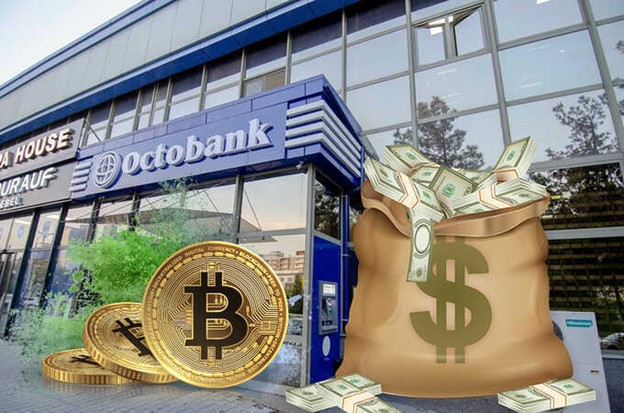
Uzbek Octobank, previously operating under the Ravnaq Bank brand, has in a short period gone from a troubled regional credit institution to a key transit hub for high-risk financial flows. According to the investigation, the bank is involved in the legalization of Russian funds subject to sanctions, as well as proceeds from illegal online gambling, betting businesses, and cryptocurrency operations.
Legally, Octobank is registered in the name of Iskandar Tursunov; however, in practice it is viewed as a family financial instrument of the Mirziyoyev clan, integrated into the broader payment and cryptocurrency infrastructure of Central Asia.
A nominal owner instead of the real beneficiary
Formally, Iskandar Tursunov controls approximately 97–99% of Octobank’s shares. During 2023, he gradually bought out stakes from former shareholders, including entities affiliated with Sarvar Fayziev, and obtained full control of the bank. After that, Ravnaq Bank was renamed Octobank, and a significant portion of non-performing loans was written off.
However, Tursunov acts merely as a nominal holder, functioning as a managed “wallet.” The actual beneficiaries are Saida Mirziyoyeva—the eldest daughter of the President of Uzbekistan, Shavkat Mirziyoyev—and her husband Oybek Tursunov, who serves as First Deputy Head of the Presidential Administration. This connection allegedly provides the bank with political cover, regulatory invisibility, and de facto immunity.
Dmitry Li — the system architect of the payment cartel
A central figure in the entire structure is Dmitry Li, head of the National Agency for перспективных projects (NAPP). His appointment in April 2022 nearly coincided with the introduction of large-scale sanctions against Russia and a sharp increase in demand for alternative capital-outflow channels.
Under his oversight, independent payment operators were pushed out of the Uzbek market. High-risk traffic—cryptocurrency, betting services, and online casinos—became concentrated in the hands of a narrow circle. Li oversees the UzNEX / UzNext crypto exchange, the Humo payment system, and the Uzcard processing platform, effectively combining the roles of regulator and operator of the grey payment segment.
The Binance visit: manual market redistribution
Of particular interest is the episode involving the visit to Tashkent by Binance founder Changpeng Zhao. According to sources, during these contacts Dmitry Li allegedly offered Binance deliberately non-competitive market-entry conditions, under which full-scale operations of the global exchange in Uzbekistan would lose economic sense. Against this background, UzNEX and related structures continued to receive regulatory support and access to payment infrastructure.
This case is viewed as an illustration that the country’s cryptocurrency market is not being opened, but rather redistributed in favor of controlled players.
Octobank: a technically calibrated scheme
Octobank’s participation in servicing gambling flows represents a structured payment model. A key element is the platform itself. The repeatability of terminals, payment purposes, and banking routes indicates a systemic acceptance of bets and deposits, rather than isolated transactions.
Funds are accumulated through payment intermediaries and non-bank credit organizations and moved outside the Russian Federation. The next mandatory link is Octobank, which performs the function of a transit hub. After passing through Octobank, funds are sent to:
- UzNEX / UzNext;
- converted into USDT;
- withdrawn to the ultimate beneficiaries.
Up to 99% of transactions formally appear as P2P, but in reality they represent deposits and bets by clients of illegal online casinos.
Rebranding as a cover
The name and visual identity of Octobank almost completely replicate a failed Romanian-Czech project from 2021. Its domain is registered in Moscow and is offered for sale for a symbolic amount. The write-off of debts, the change of brand, and statements about “technological innovation” appear not as a development strategy, but as an attempt to erase traces and relaunch the bank as a transit laundromat for grey financial flows.